General Info
National Institute of Drug Abuse (NIDA) : https://www.drugabuse.gov
Treatment information page: https://www.drugabuse.gov/publications/drugfacts/treatment-approaches-drug-addiction
Substance Abuse and Mental Health Services Administration’s (SAMSHA) evidence-based practices resource center: https://www.samhsa.gov/ebp-resource-center
Toolkit on Substance and Pregnancy – This comprehensive toolkit reviews numerous topics related to substance use and pregnancy, including but not limited to trauma informed care, MOUD (medication for opioid use disorder), stigma, breastfeeding, & involvement with CPS. Please note some information discussed is based on New York laws, data, statistics, etc. https://issuu.com/harmreduction/docs/pregnancy_and_substance_use-_a_harm_2fa242e7fb6684
NIDA Substance Use While Pregnant & Breastfeeding Webpage: https://nida.nih.gov/publications/research-reports/substance-use-in-women/substance-use-while-pregnant-breastfeeding
Academy of Perinatal Harm Reduction – https://www.perinatalharmreduction.org/
National Harm Reduction Coalition – https://harmreduction.org/
Drugs and Lactation Database – https://www.ncbi.nlm.nih.gov/books/NBK501922/
State policy information: Information on reporting, testing, targeted treatment programs for substance use in pregnancy https://www.guttmacher.org/state-policy/explore/substance-use-during-pregnancy#−
Drug Use and Unborn Babies – https://easyread.drugabuse.gov/content/drug-use-hurts-unborn-babies
SAMHSA YouTube Playlist “Treatment for Opioid Dependence During Pregnancy”
NOVA (PBS) Documentary “Addiction: discover how opioid addiction affects the brain and how evidence-based treatments are saving lives.” (Approximately 1 hour)
https://www.pbs.org/wgbh/nova/video/addiction
MHAMD’s Healthy New Moms program continues to compile and update PMAD resources for both families and providers.
- Resources for Providers — a list of scientific articles about PMAD prevalence, risk factors, treatment options, and more.
- Visit Preparation Resource — designed to support conversations with a health care provider by noting issues to discuss ahead of an appointment and ensuring important information is readily available.
Recovery Programs in Maryland
Hope House Treatment Centers
26 Marbury Drive
Crownsville, MD 21032
(410) 923-6700
419 Main Street, Laurel, MD 20707
(301) 490-5551
Maryland Addiction Recovery Center
8600 LaSalle Road Carroll Building, Suite 212
Towson, MD, 21286
(410) 773-0501
Bayview Addiction Medicine Unit: For pregnant people who want stabilization or withdrawal management (“detox”).
4940 Eastern Avenue
Baltimore, Maryland 21224
(410) 550-1910
Center for Addiction & Pregnancy (CAP): For pregnant people who want coordinated health care services, incl. housing.
5200 Eastern Avenue
Mason F. Lord East Tower, 6th Floor
Baltimore, MD 21224
(410) 550-0051
Contact Cassie Alleman: 410-550-3034 or callema3@jhmi.edu
800 Tydings Lane (Main Campus)
Havre de Grace, MD, 21078
(800) 799-4673
Klien Ambukatory Care Center (IOP)
520 Upper Chesapeake Drive, Suite 304
Bel Air, MD, 21014
(800) 799-4673
Union Hospital Professional Building (IOP)
111 W. High Street Suite 109
Elkton, MD, 21921
(800) 799-4673
https://www.ashleytreatment.org/
MD Health and Recovery Practice: Offers comprehensive care for people who use or have previously used drugs. Services include: Preventive screening, Women’s health, Behavioral health med management, Infectious disease treatment, & Wound care. Accepts Medicaid. Drop-in OK M-F 7am to 3pm.
1001 W Pratt St
Baltimore, MD 21223
443-462-3461 (HARP) or kate.dunn@som.umaryland.edu / aringwala@som.umaryland.edu
443-462-3694 (buprenorphine or methadone treatment only)
UMD SUPPORT Clinic: For preconception, pregnant, and early postpartum people who want outpatient services. OB practice focused on patients with SUD. Services include: OB and GYN care, Buprenorphine prescribing, Social work, OB Peer Recovery Coach.
120 Penn St
Baltimore, MD 21201
(410) 706-2500 (specify referral is for Dr. Katie Mark’s SUPPORT Clinic)
If difficulty, contact Katie Mark directly at kmark@som.maryland.edu
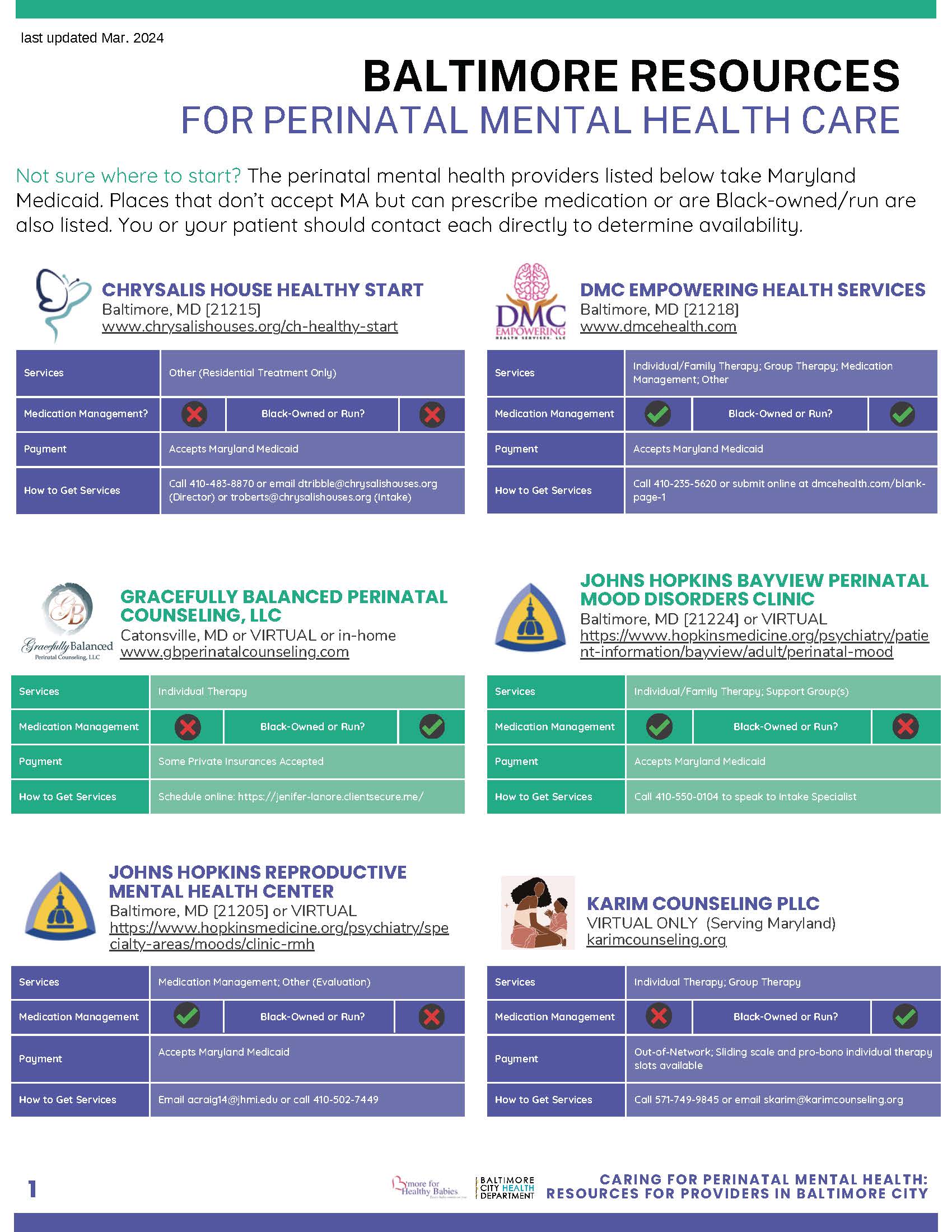
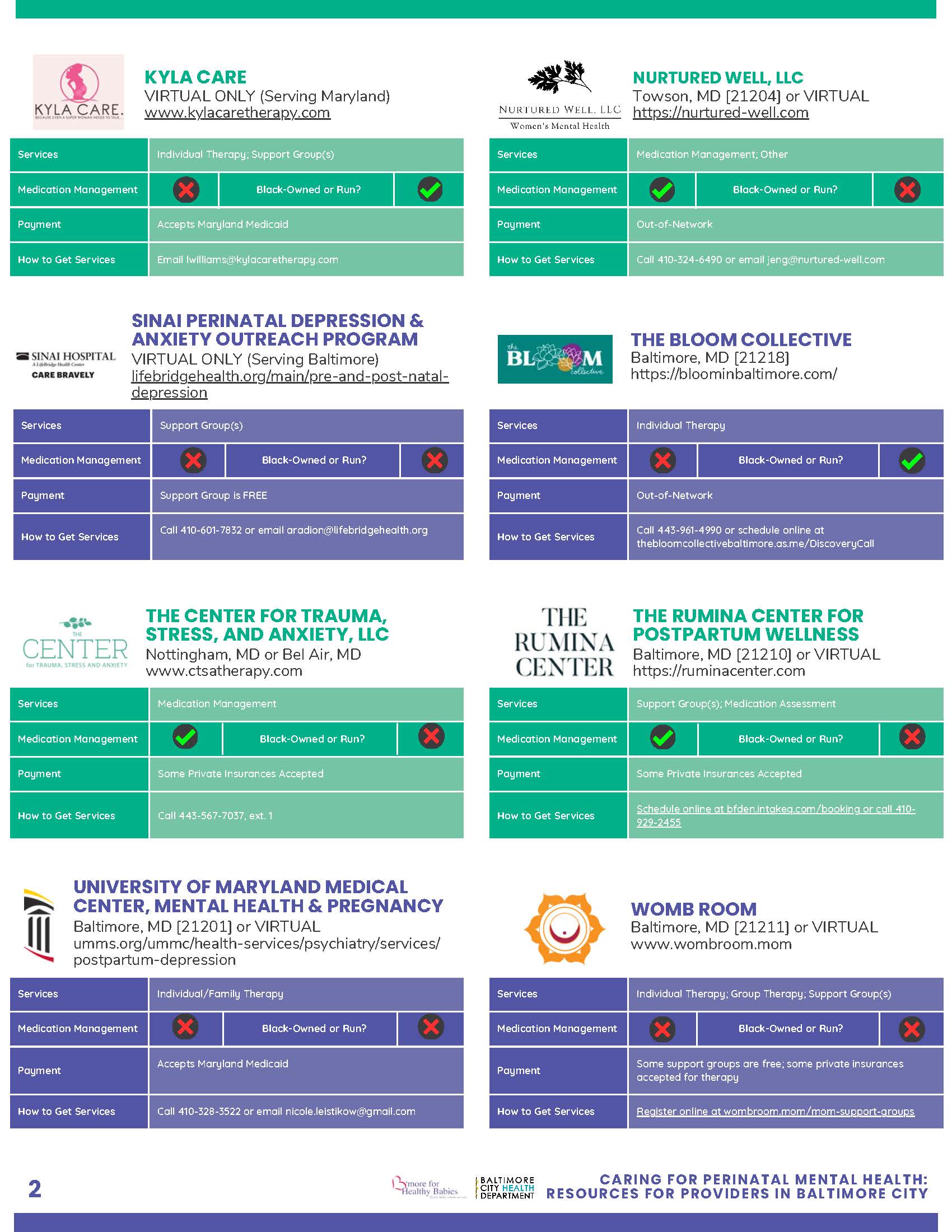
Women & Children Programs
The following are Substance Use Recovery Programs that allow women to bring their children with them during their stay.
239 N Gay Street
Baltimore, MD 21202
(410) 605-0492
*for Baltimore City residents only
Mountain Manor Treatment Center (Safe Harbor Program)
9701 Keysville Road
Emmitsburg, MD 21727
(410) 233-1400
1570 Crownsville Road
Crownsville, MD 21032
(410) 974-6829
Gaudenzia Park Heights
4615 Park Heights Avenue
Baltimore, MD 21215
(443) 423-1500
Center for Addiction and Pregnancy at Johns Hopkins
4940 Eastern Avenue
Baltimore, MD 21224
410-550-3066
Breastfeeding Resources
The NIH LactMed® database contains information on drugs and other chemicals to which breastfeeding mothers may be exposed. It includes information on the levels of such substances in breast milk and infant blood, and the possible adverse effects in the nursing infant. Suggested therapeutic alternatives to those drugs are provided, where appropriate. All data are derived from the scientific literature and fully referenced. A peer review panel reviews the data to assure scientific validity and currency.
- The LactRx app is a free app with access to the LactMed database: https://mothertobaby.org/lactrx/
MommyMeds for Moms: MommyMeds is the premier health & safety app for all pregnant and breastfeeding mothers. Ensure safe breastfeeding and care of your baby while using prescription and over-the-counter medication.
- Mobile app available on Apple and Google Play
Breast Milk Preparation and Storage: CDC guidelines for the safe handling, storage, and preparation of breast milk.
Alcohol Use & Breastfeeding: Special Considerations: Safety concerns, how timing effects milk’s safety, and strategies to lessen exposure including “pumping and dumping.”
Parent Handouts on Breastfeeding from the Academy of Breastfeeding Medicine (Scroll past the practitioner handouts). Topics include:
- Hypoglycemia
- Bedsharing & Breastfeeding
- Physiologic Infant Care: Supporting Breastfeeding, Sleep, and Well-being
- Mastitis
- Available in multiple languages https://www.bfmed.org/parent-handouts
Learning Opportunities
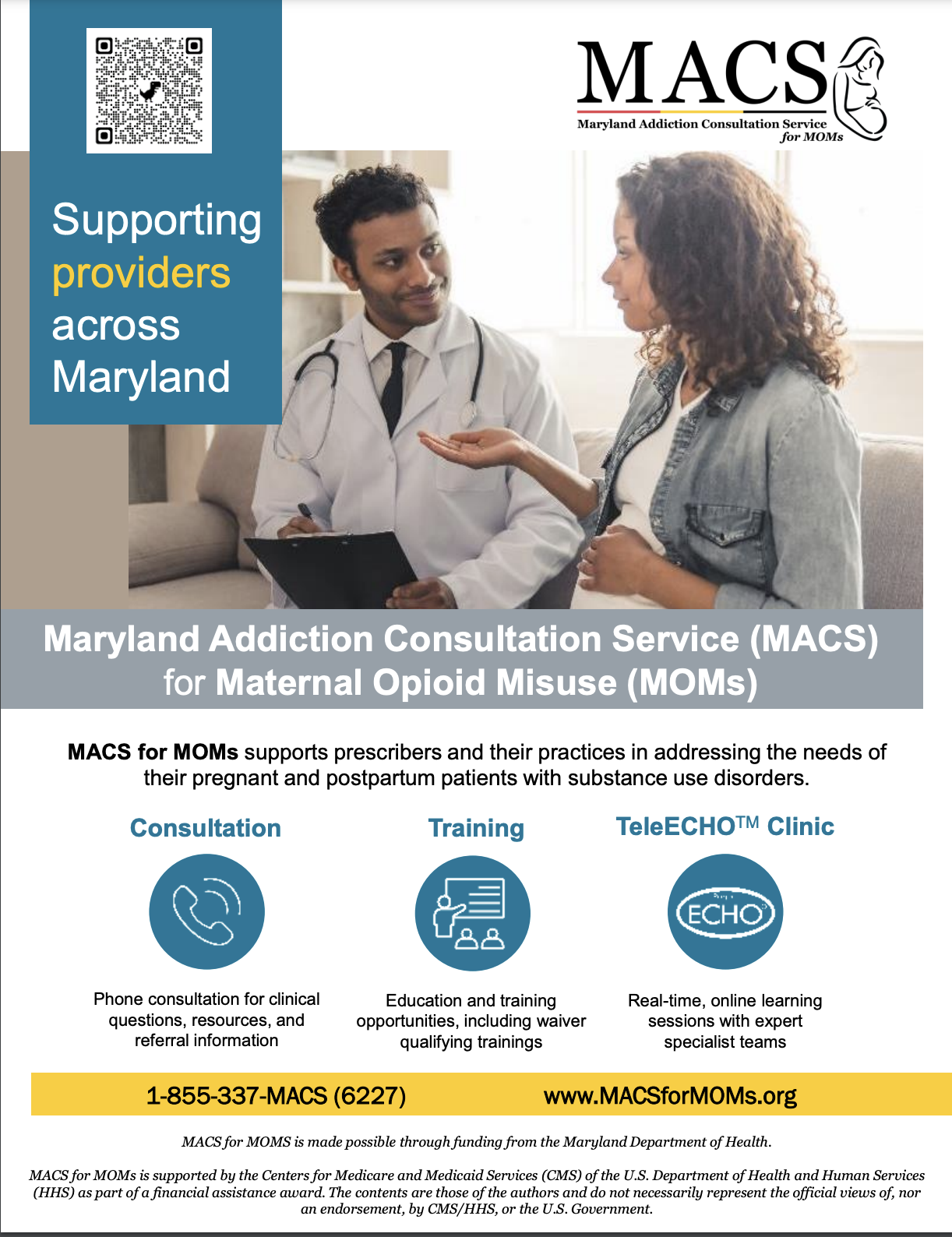
The Maryland Addiction Consultation Service for Maternal Opioid Misuse (MACS for MOMs) supports maternal health providers in addressing the needs of their pregnant and postpartum patients with substance use disorders (SUD), particularly opioid use disorder (OUD). MACS for MOMs, an expansion of the Maryland Addiction Consultation Service (MACS), is a statewide program that is free to all providers.
MOM Communication Toolkit – Digital resources created from the MACS for MOMs initiative. Resources include downloadable materials and video content.
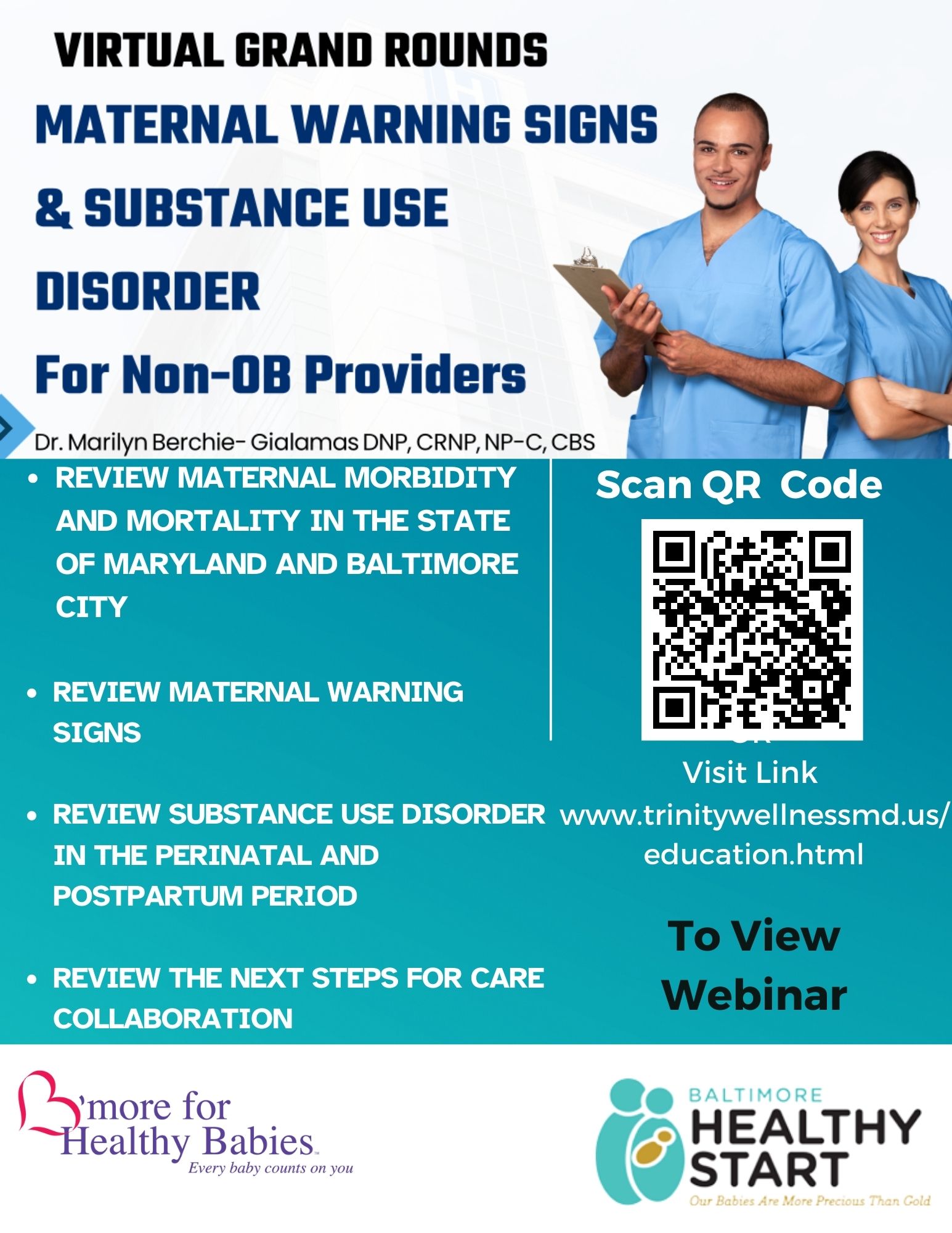
Drug overdose is the leading cause of maternal death in Maryland and Baltimore. It most commonly occurs in the late postpartum period, well after most patients have ceased perinatal care. However, these individuals show up elsewhere: the ED, primary care offices, behavioral health clinics, and pediatric practices. This 30-minute video – which describes maternal morbidity and mortality, stresses the importance of screening for postpartum status, and covers warning signs that can mean a birthing person is in danger – was created for clinicians in these settings.
Register here- https://www.trinitywellnessmd.us/education.html
Informational Articles
Historical Stigma and Stereotypes: How They Harm Pregnant African Americans with SUDs—and their Children—and What We Can Do About It – This article is about behavioral healthcare at the intersection of four of these streams of stigma, stereotype, and discrimination: being Black, being female, being pregnant, and having a substance use disorder (SUD). Already in a state of heightened physical, psychological, social, and often financial vulnerability, these individuals are also targets of multiple myths and prejudices, blocking access to appropriate treatment and support.